Application: For welding of nuclear power engineering, pressure equipment and related structural components. Characteristics: Excellent welding performance with low spatter, beautiful bead appearance and high deposition efficiency. The weld metal features low porosity sensitivity and good all-position weldability. Welding Positions: PA, PB, PC, PD, PE, PF Precautions: 1.Heat input directly affects the mechanical properties of welds. Adjust heat input according to actual working conditions; use low heat input as far as possible for critical structures. 2.Remove rust, oil, moisture and other contaminants from the workpiece before welding.
1. Deposited Metal, % by Mass
Item
C
Mn
Si
S
P
Cu
Typical
0.07
1.38
0.89
0.009
0.009
0.09
ER70S-G
Application:It is used for the welding of carbon steel and low-alloy steel structures with corresponding strength grades, and can be applied in industries such as engineering machinery, shipbuilding and vehicle manufacturing. Characteristics:This is a 500MPa grade carbon steel welding wire containing titanium (Ti) element, which refines the grains of the deposited droplets and weld metal. It features good high-current welding performance, excellent impact toughness, as well as low spatter and smoke generation. Precautions: 1. Impurities such as rust, oil stains and moisture on the weldment must be completely removed before welding. 2. The welding heat input directly affects the mechanical properties of the weld. The value of heat input shall be determined according to the importance level of the structure. The more important the structure is, the smaller the heat input should be used as far as possible. 3. The provided welding parameters are for reference only. Users shall formulate appropriate welding procedures for production according to specific working conditions.
1. Deposited Metal, % by Mass
Item
C
Mn
Si
S
P
Ti+Zr
Typical
0.07
1.56
0.85
0.009
0.01
0.15
2. Deposited Metal Mechanical Properties
Item
Tensile Strength (Rm/MPa)
Yield Strength (Rel/Rp0.2 Mpa)
Elongation (A/%)
Charpy V-Notch Impact Energy KV₂ (J) at -30℃
Standard
≥500
≥420
≥22
≥47
Typical
560
480
27
88
3. Welding Current (Recommended)
Wire Diameter(mm)
0.8
1
1.2
1.6
Current(A)
50-180
70-230
80-350
120-500
ER80S-G
Application:It is used for the welding of steel structures with corresponding strength grades, and can be applied in steel structure manufacturing industries such as engineering machinery and coal mining machinery. Characteristics:This is a 550MPa grade low-alloy steel welding wire, which adopts CO₂ or Ar+CO₂ mixed gas shielding during welding. The welding wire features less spatter, stable electric arc and beautiful weld formation in the welding process. Precautions: 1. Impurities such as rust, oil stains and moisture on the weldment must be thoroughly removed before welding. 2. The welding heat input directly affects the mechanical properties of the weld, and its value shall be determined according to the importance level of the structure. The more important the structure is, the smaller the welding heat input should be adopted as far as possible. 3. The provided welding parameters are for reference only. Users shall formulate appropriate welding procedures for actual production according to specific working conditions.
1. Deposited Metal, % by Mass
Item
C
Mn
Si
S
P
Mo
Ti
Cu
Standard
≤0.12
1.20-1.9
0.40-0.8
≤0.025
≤0.025
0.20-0.5
≤0.2
≤0.5
Typical
0.08
1.75
0.59
0.004
0.011
0.33
0.02
0.12
2. Deposited Metal Mechanical Properties
Item
Tensile Strength (Rm/MPa)
Yield Strength (Rel/Rp0.2 Mpa)
Elongation (A/%)
Charpy V-Notch Impact Energy KV₂ (J) at -30℃
Standard
≥550
≥470
≥17
≥27
Typical
600
531
25
100
3. Welding Current (Recommended)
Wire Diameter(mm)
1
1.2
1.6
Current(A)
70-230
80-350
120-500
ER90S-G
Application:It is used for the welding of 600MPa grade high-strength steel structures, and can be applied in industries such as coal mining machinery, bridges, construction and vehicle manufacturing. Characteristics:This is a 600MPa grade low-alloy steel welding wire, suitable for CO₂ gas shielded welding. It features low spatter during the welding process, beautiful weld formation, and can be used for all-position welding. Precautions: 1. Impurities such as rust, oil stains and moisture on the weldment must be completely removed before welding. 2. The welding heat input directly affects the mechanical properties of the weld, and its value shall be determined according to the importance level of the structure. The more important the structure is, the smaller the welding heat input should be adopted as far as possible. 3. The provided welding parameters are for reference only. Users shall formulate appropriate welding procedures for actual production according to specific working conditions.
1. Deposited Metal, % by Mass
Item
C
Mn
Si
S
P
Cr
Cu
Typical
0.08
1.58
0.72
0.007
0.01
0.2
0.09
2. Deposited Metal Mechanical Properties
Item
Tensile Strength (Rm/MPa)
Yield Strength (Rel/Rp0.2 Mpa)
Elongation (A/%)
Charpy V-Notch Impact Energy KV₂ (J) at -30℃
Standard
≥600
≥490
≥19
≥47
Typical
640
550
24
82
3. Welding Current (Recommended)
Wire Diameter(mm)
0.8
1
1.2
1.6
Current(A)
50-180
70-230
80-350
120-500
ER100S-G
Application:It is used for the welding of API 5L, X100 and other pipeline steels with the same strength grade. Characteristics:This is a 700MPa grade low-alloy steel welding wire, which is treated with low carbon, high manganese and micro titanium. The deposited metal with high strength and high toughness is obtained through solution strengthening, precipitation strengthening and grain refinement strengthening by alloying elements such as nickel, molybdenum, vanadium and niobium. It is suitable for Ar+CO₂ mixed gas shielded welding, featuring low spatter, stable electric arc and beautiful weld formation during welding, and can be used for all-position welding. Precautions: 1. Impurities such as rust, oil stains and moisture on the weldment must be thoroughly removed before welding. 2. The welding heat input directly affects the mechanical properties of the weld, and its value shall be determined according to the importance level of the structure. The more important the structure is, the smaller the welding heat input should be adopted as far as possible. 3. The provided welding parameters are for reference only. Users shall formulate appropriate welding procedures for actual production according to specific working conditions.


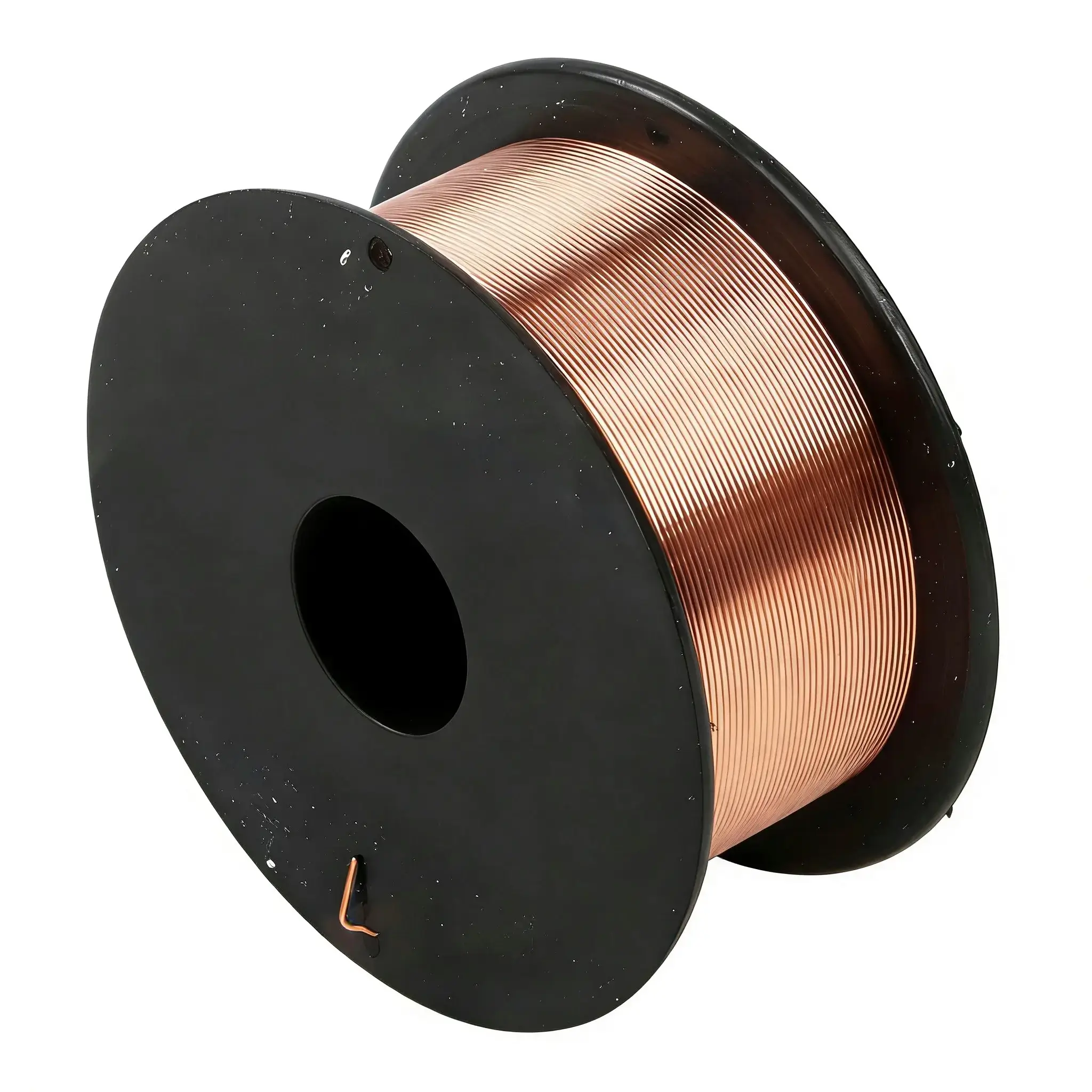
 Carbon Steel