

Get quote
Get Free Consultation!
We are ready to answer right now! free consultation.
Email:Trista55555@outlook.com
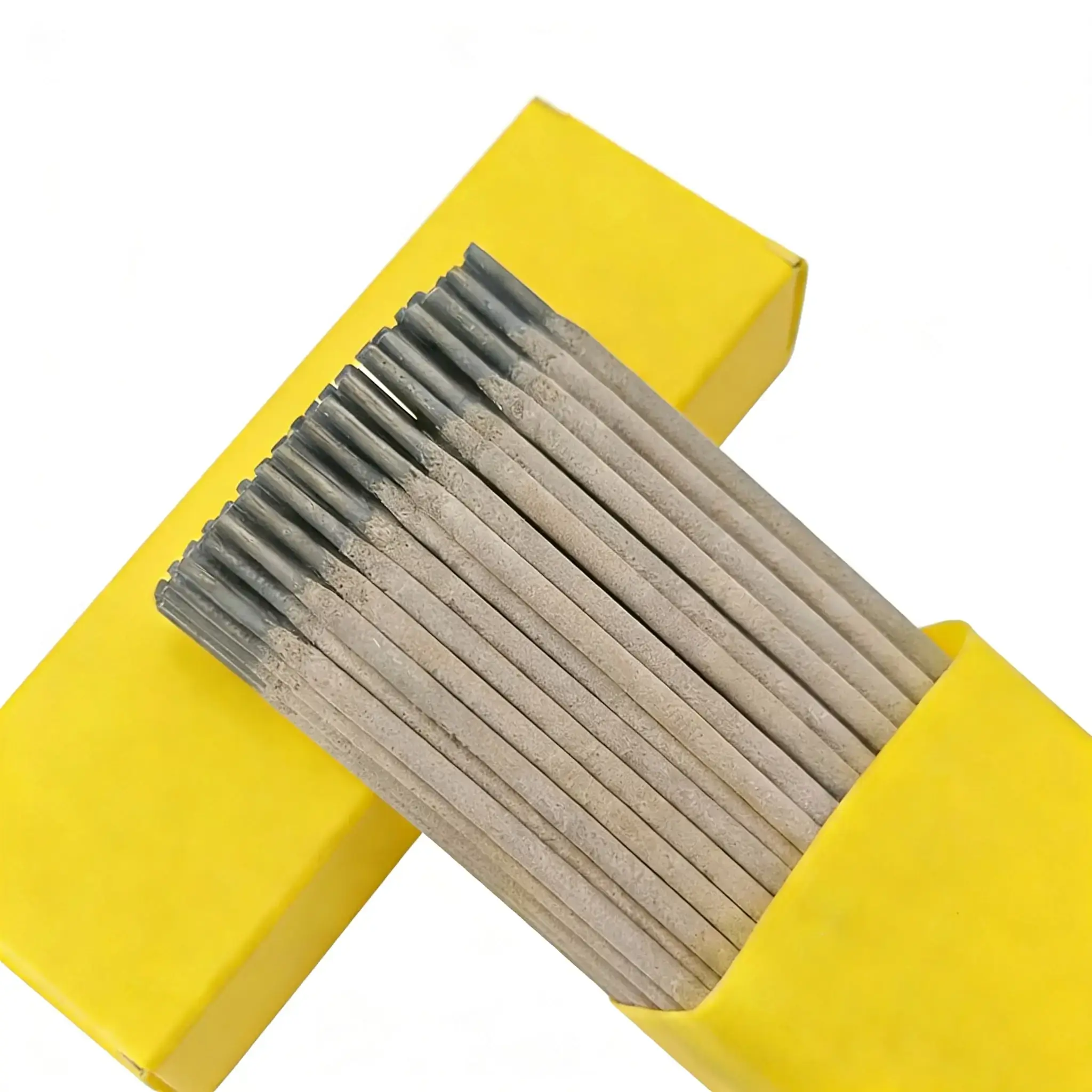
Application:Mainly used for welding steel pipes of corresponding strength grades, as well as other structures such as ships and bridges.
Characteristics:E6010 is a cellulose sodium type coated acidic electrode specially designed for vertical downward welding. Adopt DC reverse polarity; it supports all-position welding including vertical downward welding. During downhill welding, molten metal and slag do not flow down. It features strong arc blowing force and deep penetration. It enables single-sided welding with double-sided formation for root passes, delivering high welding efficiency.
Welding Positions:PA, PB, PC, PD, PE, PF, PG
Precautions:
1. In normal conditions, baking is not required before use. If the electrode becomes damp, bake it at 70–90℃ for 1 hour before welding.
2. Remove rust, oil, moisture and other contaminants from the workpiece before welding.
3. Avoid excessive weaving during welding and maintain a proper arc length.
X-ray Test: Grade Ⅱ
| Item | C | Mn | Si | S | P | Ni | Cr | Mo | V |
| Standard | ≤0.20 | ≤1.20 | ≤1.00 | ≤0.035 | ≤0.040 | ≤0.30 | ≤0.20 | ≤0.30 | ≤0.08 |
| Typical | 0.09 | 0.42 | 0.15 | 0.02 | 0.025 | 0.03 | 0.035 | 0.005 | 0.004 |
| Item | Tensile Strength (Rm/MPa) | Yield Strength (Rel/Rp0.2 Mpa) | Elongation (A/%) | Charpy V-Notch Impact Energy KV₂ (J) at -30℃ |
| Standard | ≥430 | ≥330 | ≥20 | ≥27 |
| Typical | 475 | 400 | 26 | 80 |
Welding Current (Recommended):(DC⁺)
| Electrode Diameter(mm) | 2.5 | 3.2 | 4.0 | 5.0 |
| Electrode Length(mm) | 300 | 350 | 400 | 400 |
| Current(A) | 50-80 | 60-100 | 100-140 | 140-180 |
Application:Mainly used for welding steel pipes of corresponding strength grades, as well as structures such as ships and bridges.
Characteristics:E6011 is a cellulose potassium type coated acidic electrode specially designed for vertical downward welding. It is suitable for both AC and DC welding and can be used in all positions including vertical downward welding. During downward welding, molten metal and slag will not flow down. It features strong arc blowing force and deep penetration. For root pass welding, single-sided welding with double-sided formation can be achieved with high efficiency.
Welding Positions:PA, PB, PC, PD, PE, PF, PG
Precautions:
1. Normally, baking is not required before use. If the electrode gets damp, bake it at 70–90℃ for 1 hour before welding.
2. Remove rust, oil, moisture and other contaminants from the workpiece before welding.
3. Avoid weaving the electrode during welding and maintain a proper arc length.
X-ray Test: Grade Ⅱ
| Item | C | Mn | Si | S | P | Ni | Cr | Mo | V |
| Standard | ≤0.20 | ≤1.20 | ≤1.00 | ≤0.035 | ≤0.040 | ≤0.30 | ≤0.20 | ≤0.30 | ≤0.08 |
| Typical | 0.09 | 0.42 | 0.15 | 0.02 | 0.025 | 0.03 | 0.035 | 0.005 | 0.004 |
| Item | Tensile Strength (Rm/MPa) | Yield Strength (Rel/Rp0.2 Mpa) | Elongation (A/%) | Charpy V-Notch Impact Energy KV₂ (J) at -30℃ |
| Standard | ≥430 | ≥330 | ≥20 | ≥27 |
| Typical | 475 | 400 | 26 | 80 |
Welding Current (Recommended):(AC、DC⁺)
| Electrode Diameter(mm) | 2.5 | 3.2 | 4.0 | 5.0 |
| Electrode Length(mm) | 300 | 350 | 400 | 400 |
| Current(A) | 50-80 | 60-100 | 100-140 | 140-180 |
Application:For welding low-carbon steel structures. It is especially suitable for intermittent welding of thin plates and small components with short welds, as well as cosmetic capping welds requiring smooth surface finish.
Characteristics:A rutile coated acidic welding electrode. Suitable for both AC and DC operation and applicable to all-position welding. It features excellent workability, stable arc performance, easy re-ignition and slag removal, beautiful weld appearance and low spatter.
Welding Positions:PA, PB, PC, PD, PE, PF
Precautions:Normally, baking is not required before use. If the electrode becomes damp, bake it at 150–170℃ for 0.5 to 1 hour prior to welding.
X-ray Test: Grade Ⅱ
| Item | C | Mn | Si | S | P | Ni | Cr | Mo | V |
| Standard | ≤0.10 | 0.32-0.55 | ≤0.30 | ≤0.030 | ≤0.035 | ≤0.30 | ≤0.20 | ≤0.30 | ≤0.08 |
| Typical | 0.08 | 0.37 | 0.18 | 0.02 | 0.025 | 0.03 | 0.035 | 0.005 | 0.004 |
| Item | Tensile Strength (Rm/MPa) | Yield Strength (Rel/Rp0.2 Mpa) | Elongation (A/%) | Charpy V-Notch Impact Energy KV₂ (J) at -30℃ |
| Standard | 440-560 | ≥355 | ≥22 | ≥47 |
| Typical | 500 | 430 | 27 | 80 |
Welding Current (Recommended):(AC、DC⁺)
| Electrode Diameter(mm) | 2 | 2.5 | 3.2 | 4 | 5 | 5.8 |
| Electrode Length(mm) | 300 | 300 | 350 | 400 | 400 | 400 |
| Current(A) | 40-70 | 50-90 | 80-130 | 150-200 | 180-240 | 220-280 |
Application:It is used for butt joint welding of low carbon steel and 490 MPa high-strength steel pipelines and enables single-sided welding with double-sided formation. Applicable materials include 16Mn, 09Mn2Si, and Grade A/B/D/E shipbuilding steels.
Characteristics:A low-hydrogen potassium type basic coated electrode for root welding. Suitable for both AC and DC and capable of all-position welding. It achieves single-sided welding with double-sided formation in root passes, featuring stable arc and smooth weld appearance. Back chipping and back sealing can be omitted to improve efficiency and working conditions. Not recommended for multi-layer welding.
Welding Positions:PA, PB, PC, PD, PE, PF
Precautions:
1. Bake the electrode at 350–380℃ for 1 hour before use, and use it immediately after baking.
2. Remove rust, oil, moisture and other contaminants from the workpiece before welding.
3. Keep a short arc during welding; avoid excessive weaving and use narrow bead technique.
4. To prevent porosity at the arc start, use a run-on tab or the arc striking-and-back method.
X-ray Test: Grade Ⅰ
| Item | C | Mn | Si | S | P | Ni | Cr | Mo | V |
| Standard | ≤0.15 | ≤1.60 | ≤0.75 | ≤0.035 | ≤0.035 | ≤0.30 | ≤0.20 | ≤0.30 | ≤0.08 |
| Typical | 0.07 | 1.10 | 0.30 | 0.012 | 0.021 | 0.03 | 0.035 | 0.005 | 0.004 |
| Item | Tensile Strength (Rm/MPa) | Yield Strength (Rel/Rp0.2 Mpa) | Elongation (A/%) | Charpy V-Notch Impact Energy KV₂ (J) at -30℃ |
| Standard | ≥490 | ≥400 | ≥20 | ≥27 |
| Typical | 550 | 470 | 30 | 110 |
Welding Current (Recommended):(AC、DC⁺)
| Electrode Diameter(mm) | 3.2 | 4.0 |
| Electrode Length(mm) | 350 | 400 |
| Current(A) | 80-130 | 140-190 |
Application:Suitable for welding carbon steel and low-alloy steel structures of pressure equipment. It is also applicable to important structures in petrochemical engineering, shipbuilding, offshore platforms and other fields.
Characteristics:A low-hydrogen potassium type iron powder coated carbon steel electrode for pressure equipment. It works with both AC and DC power sources and supports all-position welding. It features excellent welding performance, stiff arc, low spatter, easy slag removal and attractive weld appearance.
Welding Positions:PA, PB, PC, PD, PE, PF
Precautions:
1. Bake the electrodes at 350–380℃ for 1 hour before use and apply them immediately after baking.
2. Thoroughly remove rust, oil, moisture and other contaminants from the workpiece before welding.
3. Maintain a short arc during welding; avoid excessive weaving and adopt narrow bead welding.
4. To prevent porosity at arc initiation, use run-on tabs or the arc striking-and-back welding method.
X-ray Test: Grade Ⅰ
| Item | C | Mn | Si | S | P | Ni | Cr | Mo | V |
| Standard | ≤0.10 | ≤1.60 | ≤0.90 | ≤0.015 | ≤0.025 | ≤0.30 | ≤0.20 | ≤0.30 | ≤0.08 |
| Typical | 0.082 | 1.10 | 0.41 | 0.011 | 0.020 | 0.002 | 0.031 | 0.011 | 0.009 |
Diffusible Hydrogen Content in Deposited Metal: ≤7.0 mL/100g (Mercury Method or Chromatographic Method)
| Item | Tensile Strength (Rm/MPa) | Yield Strength (Rel/Rp0.2 Mpa) | Elongation (A/%) | Charpy V-Notch Impact Energy KV₂ (J) at -30℃ |
| Standard | 490-610 | ≥400 | ≥22 | ≥54 |
| Typical | 560 | 450 | 30 | 160 |
Welding Current (Recommended):(AC、DC⁺)
| Electrode Diameter(mm) | 2.5 | 3.2 | 4.0 | 5.0 |
| Electrode Length(mm) | 300 | 350 | 400 | 400 |
| Current(A) | 60-100 | 100-150 | 170-210 | 210-250 |
Application:Suitable for welding carbon steel and low-alloy steel structures such as Q345, Q345R and other similar materials.
Characteristics:It is an iron powder type basic coated low-hydrogen potassium electrode. Compatible with both AC and DC and suitable for all-position welding. It offers excellent welding performance with stable arc, low spatter, easy slag removal, smooth weld appearance and high deposition efficiency. The weld metal possesses excellent plasticity and low-temperature toughness.
Welding Positions:PA, PB, PC, PD, PE, PF
Precautions:
1. Bake the electrodes at 380–400℃ for 1 hour before use, and apply them immediately after baking.
2. Thoroughly remove rust, oil, moisture and other contaminants from the workpiece before welding.
3. Maintain a short arc during welding; avoid excessive weaving and adopt narrow bead welding.
4. To prevent porosity at arc starting, use run-on tabs or the arc striking-and-back welding method.
X-ray Test: Grade Ⅰ
| Item | C | Mn | Si | S | P | Ni | Cr | Mo | V |
| Standard | ≤0.10 | ≤1.60 | ≤0.65 | ≤0.030 | ≤0.030 | ≤0.30 | ≤0.20 | ≤0.30 | ≤0.08 |
| Typical | 0.07 | 1.10 | 0.30 | 0.013 | 0.019 | 0.03 | 0.035 | 0.005 | 0.004 |
Diffusible Hydrogen Content in Deposited Metal: ≤7.0 mL/100g (Mercury Method or Chromatographic Method)
| Item | Tensile Strength (Rm/MPa) | Yield Strength (Rel/Rp0.2 Mpa) | Elongation (A/%) | Charpy V-Notch Impact Energy KV₂ (J) at -30℃ |
| Standard | 500-640 | ≥420 | ≥22 | ≥47 |
| Typical | 580 | 490 | 30 | 180 |
Welding Current (Recommended):(AC、DC⁺)
| Electrode Diameter(mm) | 2.5 | 3.2 | 4.0 | 5.0 |
| Electrode Length(mm) | 300 | 350 | 350 | 400 |
| Current(A) | 60-100 | 90-140 | 160-210 | 180-240 |
 Carbon Steel